Pros don't fake
Counter-strike 2 (dubbed CS2 for short) is the direct sequel to Counter-strike: Global Offensive (CS:GO) and is a game I have mixed feelings about, despite having poured 2,000+ hours of my life into. That may sound like a lot, but pros will generally have 10,000+ hours, so I've only wasted 1/5 of the time compared to them.

In this game, you play as one of two teams in a 5v5. As a terrorist (T), your objective is to plant the bomb on one of two sites in the map, and detonate it before the CT's can defuse it. As a counterterrorist (CT), your goal is to prevent the T's from planting, or defuse the bomb once it's down. The bomb detonates after 40 seconds, so many rounds keep you on the edge of your seat, anticipating whether the bomb will explode, or if CT's will be able to defuse it in time.
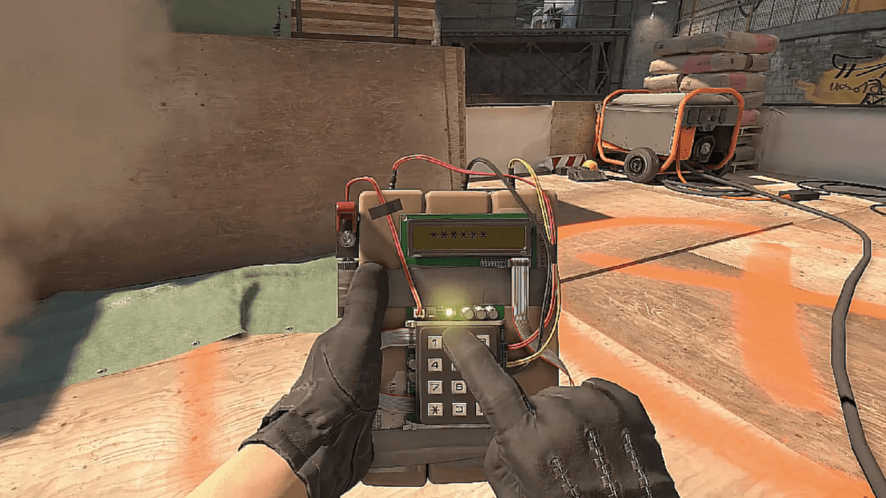

One match consists of 24 rounds total: 12 on one side, teams switch, and the first to 13 wins. In the case that both teams reach 12:12, an overtime of 6 rounds (3 each side) is held until one team reaches 16. If both teams reach 15:15, another overtime is held until one team reaches 19, and so on. Most of the time, only one or two overtimes is enough to determine the victor, but in rare cases they can go on longer. Normally, a full match lasts about 40 minutes.

There are 2 ways to win a round: either you complete your objective (for T's detonating the bomb, CT's defusing it), or you kill the enemy team before they can complete theirs. For example, if CT's kill all T's before they can plant, the CT's automatically win because T's can't plant if they're dead.

The following are my pros and cons of this game:

- High skill ceiling: Basic mechanics such as aim, movement, and recoil take many hours to master, as well as more advanced concepts such as gamesense.
- Gamesense: In order to get a good read on what's happening around the map, you learn to juggle many pieces of information at once (enemy locations, sounds, etc.)
- Pure competitive design: In CS, there's no weapon upgrades, special abilities, or characters with different stats. Anyone can buy any gun, but the better player is the one who wins the fight. It is said that in Counter-strike, your character doesn't get better, YOU get better. So when you lose a match, you usually know why.
- Team strategy depth: Coordinating with your team on who's doing what adds a tactical layer beyond just shooting bad guys.
- Strong eSports scene: Tournaments are held worldwide, with the biggest tournament (called the major) happening once a year. Professionals get high salaries, there's always a new optimal strategy to win (dubbed "the meta"), and the game has been very relevant since its very first version released in 1999.
Cons

- Toxicity: Because everybody wants to win, shifting blame or throwing out insults are not uncommon, and some players give up and try ruining the game for the rest of their team. All these actions lead to little to no repercussions.
- Luck: Every match you queue up for without 4 friends you already know, it's a dice roll for how skilled each of your teammates will be. Sometimes, you play well individually, but lose the game because your team effectively makes your situation a 1v5, whether it's because they're just bad, or actively throwing the game (losing on purpose).
- Anticheat isn't perfect: Sometimes you'll run into somebody very obviously cheating, whether that means using aimbot (their computer aims at and shoots enemies instantly) or wallhacks (sees enemies through walls, giving huge tactical advantage). And because you get penalized for leaving a match early, you have to stay and continue playing until the game is over.
- Steep learning curve: It takes many hours for beginners to grasp base mechanics (such as shooting) and the game becomes fun. Many people start out dying over and over again without knowing why yet.
- Repetitive: CS players historically hate change, they generally prefer playing the same maps because they're comfortable, familiar, and they know how to play them. They generally don't play new maps unless you force them to.
- Time commitment: Improvement in this game is not casual if you want good results. It takes consistent practice with aim training, map knowledge, and learning where to throw different grenades to block the enemy's vision (flashbang), line of sight (smoke grenade), or area denial (molotov cocktail). This might mean putting in hours a day to see any meaningful improvement. As an example, for me at one point, my stats said I had 40 some hours played in the last 2 weeks, whereas my teammates at the time had numbers up to 60 or even 80.

Overall, if I had to give this game one rating, it would be 5/5. Even with all the flaws I just mentioned, I still think at its core it's a good game, just very competitive in nature. There was a time during high school I actually wanted to go pro, and started skipping class in favor of spending more hours practicing, but the repetitive grind and toxicity pushed me away. That, and I sucked lol. Even though I find skating more fulfilling nowadays, this game has taught me teamwork, accountability, patience, among other things. I don't consider many of my 2,000 hours "wasteful", given what I've learned, and I had fun doing it. If I had to summarize my review for Counter-strike 2 in 4 words, it's: good game, shit people.

I found a perfect explanation, I am exited to try it.
ReplyDeleteThe photo in the end lmao every fps gamer experience fr, ur conclusion was really nice tho! It's true that most fps games are really toxic but what really matters is how you react to those. Glad you were able to figure out the good and fun in playing the game despite it!!
ReplyDelete